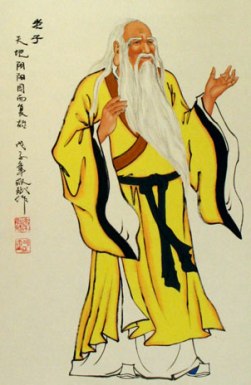
Lao Tzu
Nothingness
and Zero
as e-book:
or paperback:
A post-modern approach to Lao Tzu's Tao Te Ching
by Jeremy M. Miller
Tao Te Ching...
verse for today (*):
26
Gravity is the root of lightness;stillness, the ruler of movement.
Therefore a wise prince, marching the whole day,
does not go far from his baggage waggons.
Although he may have brilliant prospects to look at,
he quietly remains (in his proper place),
indifferent to them.
How should the lord of a myriad chariots
carry himself lightly before the kingdom?
If he do act lightly, he has lost his root
(of gravity);
if he proceed to active movement,
he will lose his throne.
(translation by James Legge, 1891)
-+-+-+-
The heavy is the root of the light.
The unmoved is the source of all movement.
Thus the Master travels all day
without leaving home.
However splendid the views,
she stays serenely in herself.
Why should the lord of the country
flit about like a fool?
If you let yourself be blown to and fro,
you lose touch with your root.
If you let restlessness move you,
you lose touch with who you are.
(translation by Stephen Mitchell, 1995)
-+-+-+-
Heaviness is the root of lightness
Quietness is the master of restlessness
Therefore the sages travel an entire day
Without leaving the heavy supplies
Even though there are luxurious sights
They are composed and transcend beyond
How can the lords of ten thousand chariots
Apply themselves lightly to the world?
To be light is to lose one's root
To be restless is to lose one's mastery
-+-+-+-
Neither heavy nor light.
Be not seduced down the road of travel.
Mastery is still.
-+-+-+-
*) The
It was written around the 6th century BC by the sage Lao Tzu.
The short text consists of 81 brief chapters, or verses.
Every day we issue a "verse of the day" for contemplation, at first in two leading English translations (Mitchell and Lin), that nevertheless differ substantially.
Since December 8th 2013, we had a radically different third translation:
On May 31st 2024, we added the classic James Legge translation from 1891, and put it on top of the other three, in chronological order.
The I Ching is based on the number 2, with its 2 x 2 x 2 x 2 x 2 x 2 (26) = 64 hexagrams.
The Tao Te Ching is based on the number 3, with its 3 x 3 x 3 x 3 = 81 chapters.
We now offer it in four translations.
Comparing these four translations can be fascinating.
Perhaps, when reflecting on the four interpretations, the true meaning will emerge.
These 81 verses simply rotate; every day the next number, and after 81, number 1 will appear again.
This is done deliberately; if you want to read the complete text, you should purchase the resp. translations by James Legge, Stephen Mitchell, Derek Lin or Jeremy M. Miller below.
(All four available in Kindle edition as well.)
If you missed yesterday's verse, you can still read it at ICHING.ONLINE, which is always one day behind of I Ching Online.NET.
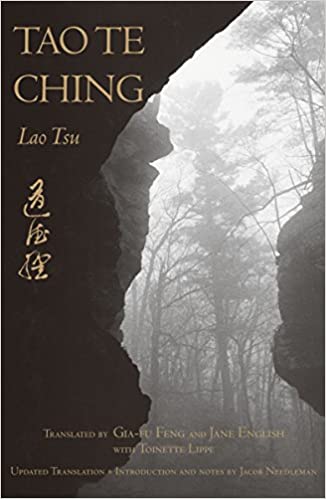
Tao Te Ching
is a Chinese classic.It was written around the 6th century BC by the sage Lao Tzu.
The short text consists of 81 brief chapters, or verses.
Every day we issue a "verse of the day" for contemplation, at first in two leading English translations (Mitchell and Lin), that nevertheless differ substantially.
Since December 8th 2013, we had a radically different third translation:

|
"Nothingness and Zero" A Post New-Age Approach to Lao Tzu's Tao Te Ching, published by courtesy of the translator and interpreter. © Copyright 2013 Jeremy M. Miller. All rights reserved. Acknowledgments: The hundreds of prior translations, especially that by Arthur Waley. To Pythagoras, who understood Zero and taught It; and to Chuang Tzu, the ideal poetic student. |
The I Ching is based on the number 2, with its 2 x 2 x 2 x 2 x 2 x 2 (26) = 64 hexagrams.
The Tao Te Ching is based on the number 3, with its 3 x 3 x 3 x 3 = 81 chapters.
We now offer it in four translations.
Comparing these four translations can be fascinating.
Perhaps, when reflecting on the four interpretations, the true meaning will emerge.
These 81 verses simply rotate; every day the next number, and after 81, number 1 will appear again.
This is done deliberately; if you want to read the complete text, you should purchase the resp. translations by James Legge, Stephen Mitchell, Derek Lin or Jeremy M. Miller below.
(All four available in Kindle edition as well.)
If you missed yesterday's verse, you can still read it at ICHING.ONLINE, which is always one day behind of I Ching Online.NET.
Tao Te Ching
James Legge
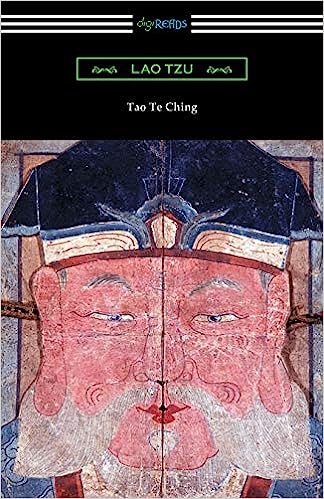
Tao Te Ching
Stephen Mitchell
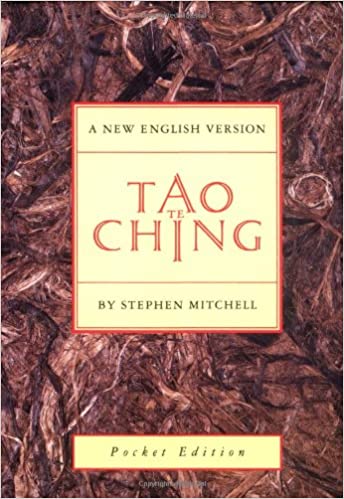
Tao Te Ching
Derek Lin
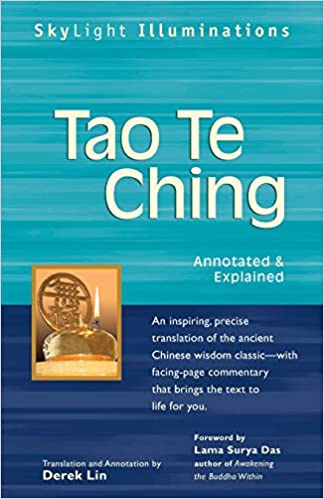
LAO-TZU
Cheng Man-ch'ing
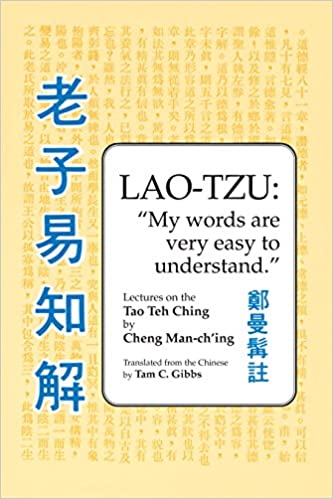
Tao Te Ching
Text-Only
Lao Tzu